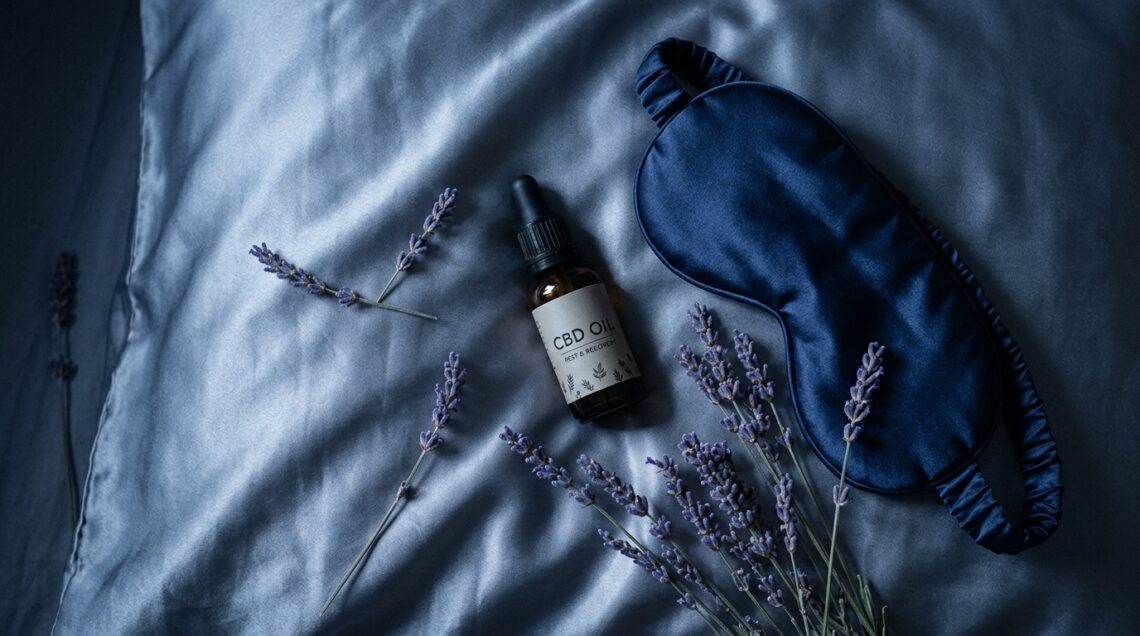
About one in three U.S. adults report sleeping fewer than the recommended seven hours a night, according to the Centers for Disease Control and Prevention. Plenty of them end up searching for a fix late at night, and CBD oil turns up in almost every result. The promises are easy to find. The evidence takes more digging.
The Numbers Behind the Search
Sleep trouble and anxiety are common enough that the interest makes sense. The National Institute of Mental Health estimates that 19.1 percent of U.S. adults had an anxiety disorder in the past year, and 31.1 percent will have one at some point in life. The American Academy of Sleep Medicine and the Sleep Research Society have issued a consensus statement that adults should regularly sleep at least seven hours.
The 2019 Gallup poll on CBD use found anxiety among the leading reasons people gave for taking it, and sleep complaints appeared as well. Demand, in other words, runs well ahead of the research.
A quick snapshot:
- U.S. adults reporting under 7 hours of sleep: about 1 in 3 (CDC)
- U.S. adults with an anxiety disorder in a given year: 19.1 percent (NIMH)
- CBD products approved by the FDA for sleep or anxiety: none
That last line surprises people. The only FDA-approved CBD medicine, Epidiolex, treats certain seizure disorders.
What Studies Have Found
Anxiety
The best-known human work uses public speaking as a stress test. In a 2011 study in Neuropsychopharmacology, a Brazilian team gave people with social anxiety disorder either 600 mg of CBD or a placebo before a simulated speech. The CBD group reported less anxiety and discomfort. A single dose, a small group, and a lab setting limit how far the result travels.
A 2017 study in Frontiers in Pharmacology tested 100, 300, and 900 mg of CBD in 57 healthy men before a public speaking task. Only the 300 mg dose reduced anxiety. Researchers described the pattern as an inverted U: too little did nothing, and too much did nothing either. Dose and response do not climb in a straight line.
Sleep
The most cited sleep paper is a case series from a Colorado psychiatric clinic, published in The Permanente Journal in 2019. It followed 72 adults, 47 with anxiety and 25 with poor sleep, most of whom took 25 mg of CBD daily as a capsule. Anxiety scores fell in about 79 percent of patients during the first month. Sleep scores improved in about 67 percent of patients in that same month, but the numbers moved up and down over time. There was no placebo group, so the results cannot separate CBD from expectation, other treatments, or chance.
A 2017 literature review in Current Psychiatry Reports called the evidence preliminary and asked for larger controlled trials. An older trial from 1981 reported longer sleep time with a 160 mg dose than with placebo, though it was small by modern standards.
The dose problem
Compare those numbers with the shelf. The anxiety studies used 300 to 600 mg in one sitting. A typical retail serving runs about 10 to 25 mg. One 300 mg dose equals twelve servings at 25 mg, and 600 mg equals up to sixty servings at 10 mg. Few studies have tested the amounts people actually buy.
| Claim | What exists | Strength of evidence |
|---|---|---|
| Lowers anxiety in a speaking test | Small placebo-controlled trials at 300 to 600 mg | Limited, single doses in lab settings |
| Improves sleep in people with anxiety | One case series, 72 adults, no placebo | Low |
| Treats chronic insomnia | Very few controlled trials | Low |
| Works at 10 to 25 mg servings | Few studies at these amounts | Unclear |
What Has a Stronger Track Record
Before adding a supplement, it helps to know what the guidelines actually lead with.
- Cognitive behavioral therapy for insomnia (CBT-I). The American College of Physicians’ 2016 guideline recommends CBT-I as the initial treatment for chronic insomnia in adults. It works through sleep scheduling and changing the thoughts that keep a person awake, and it can be delivered by a therapist, a program, or an app.
- A fixed wake time, seven days a week. This anchors the body clock better than any evening routine.
- A caffeine cutoff. A 2013 study in the Journal of Clinical Sleep Medicine found that 400 mg of caffeine taken six hours before bed cut sleep time by more than an hour. That is about two to four cups of coffee, depending on strength.
- Morning light and daytime movement. Both push sleepiness toward the evening.
- A cool, dark, quiet bedroom. Boring, and effective.
If CBD oil is on the table anyway
Plenty of people try it, and a few practical points reduce the downside:
- Drowsiness is among the most commonly reported side effects in Epidiolex trials, and alcohol or sedating medicines can add to it
- A first dose belongs at home, on a night with nothing to drive to in the morning
- Medications and liver conditions change the calculation, so a pharmacist or physician should hear about the plan first
- A product with a batch-specific lab report is a safer bet than one without
- A sleep diary with the serving, time, and next-morning rating shows within two weeks whether anything changed
Persistent trouble sleeping can point to sleep apnea, depression, thyroid problems, or other conditions. A supplement can hide those signals for a while without addressing them.
Final Thoughts
The research on CBD oil for sleep and stress is early, mixed, and based mostly on doses far higher than retail servings. No CBD product has FDA approval for either problem. Habits and CBT-I have much stronger support, and they cost little. Anyone who tries CBD oil should treat it as an experiment with notes, a tested product, and a clinician in the loop.